
A Researcher’s Journey from Childhood Rivers to Community-Led Solutions
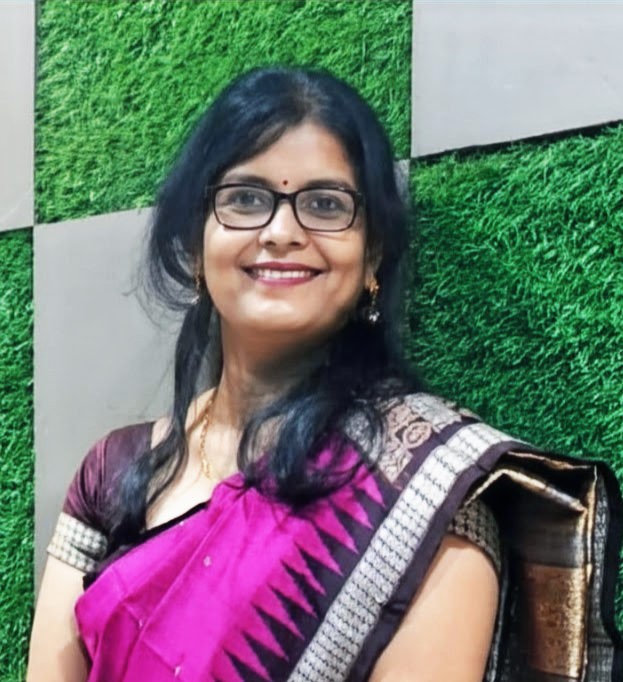
I am Dr. Jyotsnarani Jena, a researcher and sustainability practitioner working in water management, wastewater treatment, nature-based solutions and climate positive technology.

My work, from wastewater treatment to nature-based solutions and community-driven water projects, has always been guided by a simple truth: the most powerful stories of water come from the people who live closest to it.
Working with cutting-edge technologies and helping refine them into sustainable, on-ground solutions, whether for water treatment or water-quality monitoring, has taught me that every great idea begins at the root of a real problem. Every successful innovation is ultimately a story of perseverance and the collective effort of many minds working toward a water-sustainable future.
My earliest relationship with water was not through textbooks, research publications, or startup pitch decks. It began with a river that flowed past my village. That river was our gathering place, our playground, our silent confidant. We sat on its banks gossiping with friends, worshipped the sun and moon during festivals, and watched evenings dissolve into laughter. Bare feet sank into cool mud, the sky broke into shimmering fragments on the water, and we children ran down the dusty slope with nothing but excitement in our hands, sometimes a crab, sometimes a tiny fish, always joy.
The river held us, listened to us, taught us, and let us splash without judgment.
What did I really learn from those countless hours beside its water? Maybe that life, like a river, reshapes itself when it meets a stone. Or maybe something simpler that I understood only much later: that silence heals, that flowing is a form of strength.
But as we grew older, the river lost its grace. The timeless beauty faded. The river choked with hyacinth, burdened with dead fish and was no longer safe to take a dip in the scorching summer.
And this is not an isolated story. Every river, big or small, across the Indian subcontinent is fighting the same battle: high pollution loads, unchecked wastewater discharge, relentless pressure. Look at the Yamuna in the nation’s capital. Governments change, policies come and go, but the river remains suffocated under layers of toxic foam.

What went so wrong in just a few decades?
Why are our rivers turning into graveyards?
Why do our ponds and lakes vanish at the first touch of summer?
Some answers are painfully obvious. Unchecked development, industrial discharge, and policies that remain on paper. But the impact shows up far beyond polluted rivers. It reaches our taps, our wells, our kitchens. Every summer, when hand pumps run dry and entire villages queue for a single working tube well, we see the true face of this crisis: drinking water scarcity that grows sharper each year.
And yet, in responding to these challenges, we have overlooked a quiet but crucial truth: the people who understood water most intimately were slowly moved out of decision-making. For generations, it was women who fetched water and lived with scarcity every day. But when water policies were framed, their voices, the ones closest to the reality, were seldom included, their stories barely heard.

Despite all this, I am not hopeless. In fact, my hope has grown stronger. Because hope rarely comes from institutions, it comes from people. From farmers, from women, from communities, from those who still believe rivers can heal. From those who know wetlands can revive. From those who understand that restoring water is also about restoring ourselves. Every project I work on, wastewater treatment, nature-based solutions, community engagement, feels like a small payback to the nature that nurtured me.
I believe ecosystems can come back to life, not through technology alone, but through inclusion. Not through policy alone, but through participation. And most of all through stories, stories that bring empathy, urgency, and intention. Stories that remind us that water is not just an SDG, a resource, or an economic metric.
It is where our ancestry rests. And it shapes the future our children will inherit.
As I step into this voluntary role as the Regional Storyteller and Community Lead, South Asia for the Water Storytellers Collective, I hope to bring these lived realities and forgotten wisdoms back into the centre of water conversations.
This collective is not just a network, it is a movement to ensure that the stories shaping policies, technologies and community actions are grounded in truth, empathy, and lived experience.
I live by the belief that when we weave together science, innovation, community memory, and the emotional power of storytelling, we can revive ecosystems, drive policy implementation in ways that truly serve people, and nurture the relationships that bind us to our rivers, linking policy with practice, and our past with our shared future.


Comments