
We have enough data
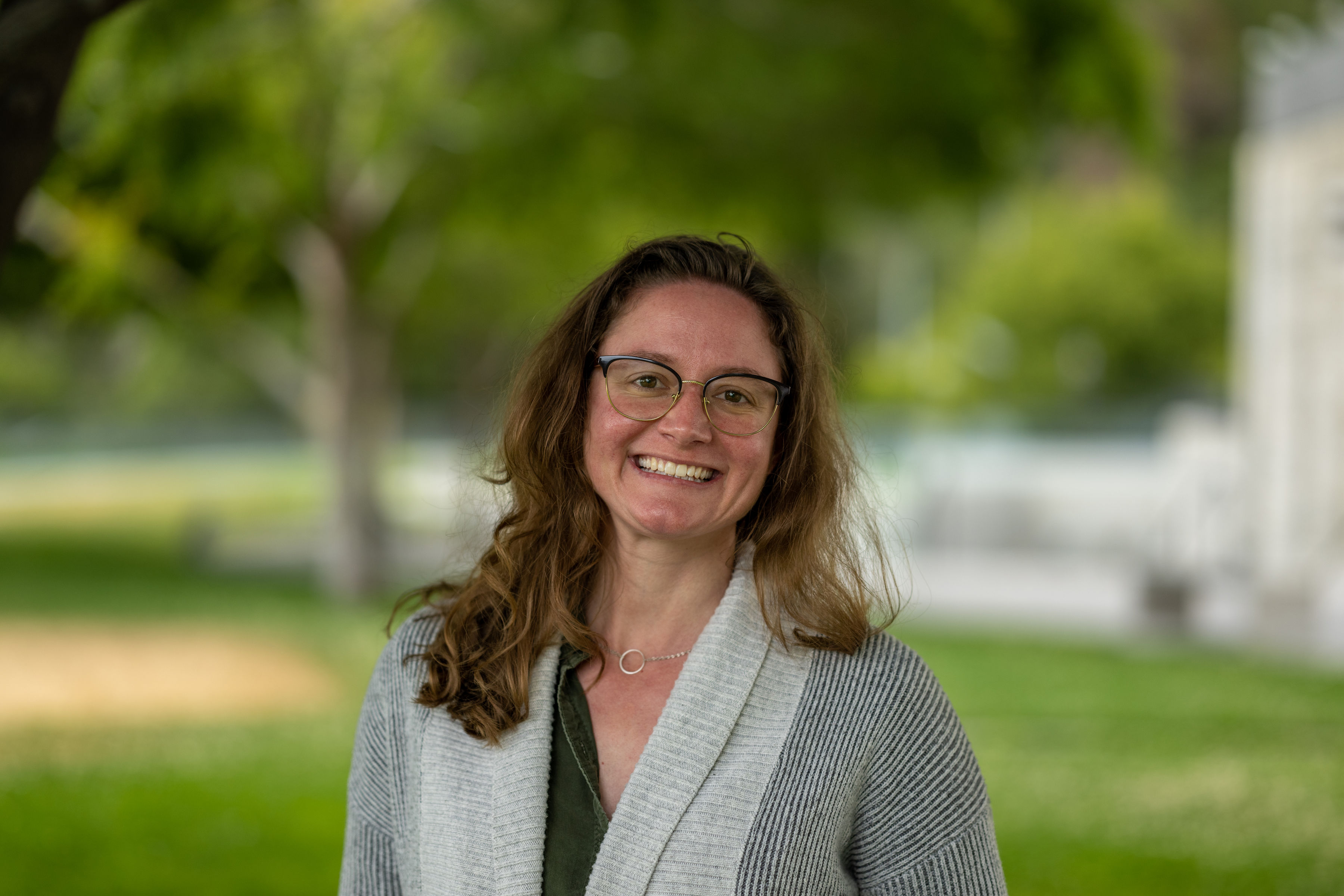
Emma Crow-Willard went looking for water on the moons of Jupiter and Saturn before she came home to look for it here. She mapped ice moons at NASA's Jet Propulsion Laboratory, worked on a probe that measures carbon dioxide from the International Space Station, and advised California water utilities as a hydrogeologist. Then she left all of it to tell stories. She now runs Roots of Unity, a nonprofit making films about the invisible systems that shape our daily lives.
We talked about the sentence from her boss that helped her pivot in her career, why nobody funds communications, and what she has learned about doing ambitious work alone.
This interview has been lightly edited for length and clarity. Watch the full conversation on our YouTube channel
You started out as a scientist and ended up telling stories. Was there a moment where that shift happened?
Emma: It started in high school. I wanted to search for life in the universe. A friend of the family, David Grinspoon, was a planetary scientist who had studied under Carl Sagan, and I read a bunch of his books for my final thesis of high school. I wrote a whole paper about the search for life in the universe on how we search for it, and the key ingredients we are searching for. And obviously water was one of those key ingredients. So it all started with water.
In college I got a NASA space grant to work with the life detection technology group at the NASA Jet Propulsion Laboratory in Pasadena, studying life in extreme environments on Earth, what we call extremophiles. Basically we were zapping it with things, trying to see how extreme this life can go before it dies.
From there I was mapping one of Saturn's moons, Enceladus, which is a water ice moon. It has what look like multiple geysers coming out of the South Pole. That tells you right away there's energy on that moon. It's constantly changing. It's alive.
The three ingredients for life are water, energy and amino acids. The Cassini mission, which was orbiting Saturn, flew through the jet of Enceladus, and it found amino acids. So we know the three ingredients for life are right there.
And I felt this obligation to go into climate change, because we know there's life on Earth. Here I am, really excited about the search for life in the universe, but we have this special, awesome thing already going for us. As much as I would love to keep studying that, I feel like I need to protect life on Earth.
The other shift was that I really like working with people. A lot of my research was alone at a computer, doing mapping and coding. My favourite part of the job was going to conferences and talking to people about my research. The moment I moved from the data to the communications came while I was doing climate research. I had joined the Orbiting Carbon Observatory team at the Jet Propulsion Laboratory in 2011. And I asked my boss: we're going to put this probe on the International Space Station to measure CO2 in the atmosphere, but don't we already know CO2 is causing global warming? Why do we need more measurements?
And he said to me, well, maybe Congress will do something with more data.
That was the moment. No. We have enough data. They won't do anything else. It's not about the data. It's about the communications. It's about the storytelling. That's when I switched.
“Maybe Congress will do something with more data.” No. We have enough data.
It was a roundabout route. I went into consulting first, which was more applied science, working as a hydrogeologist, advising water utilities around California on their groundwater use and from there I went into communications.
Tell us about your work at Roots of Unity and what's one project or story you are especially proud of?
Emma: Roots of Unity is evolving. It started as a consultancy to help nonprofits and organisations communicate their work better.
I ended up doing a National Geographic project on climate refugees, telling specific stories about people displaced by climate impacts. I went to Puerto Rico and talked with people about why they stayed, or why they left, and why they came back, after the hurricanes in 2017. That was Climate Refugee Stories.
Recently I've turned it from a consultancy into a nonprofit with its own editorial calendar. One project I'm really excited about is a docuseries on humans' relationship with water.
Think of baptism. We baptise people in water. When I did the Annapurna Circuit in Nepal, there's a temple called Muktinath, a temple of a thousand little waterspouts, and you walk through them, and it's a meditative thing. There are so many ways we worship water, and at the same time we pollute it. And at the same time we need it to survive. It's a strange relationship.
So the way I've pivoted Roots of Unity is towards stories about the invisible systems that shape our everyday lives.
Nobody understands why they turn on a tap and get clean water unless you work in water, it's magic!
Electricity, same thing. You turn on a switch, the light comes. Nobody thinks about all the work going into that. Those are the kinds of stories I want to tell.

What's the hardest part of communicating about water and climate and what keeps you in this work on the difficult days?
Emma: The hardest part is that it's so broad. There are so many different careers you could have in water. Climate has the same problem. You say climate, what does that even mean? It's way too big. You have to zoom in. Are you talking about tax credit financing of solar panels, or preventing flooding in one town?
The other thing I run up against, as a former researcher, is that no one values the communicator.
They think, I'll just talk to the researcher. People don't understand the value a communicator brings. Entire organizations, entire government agencies don't fund communications at all and then they wonder why the work isn't reaching people.
There are some scientists who are very good at communicating. But that's not the majority. And communicating is a full-time job. A scientist can either do science or be a communicator.
Something I learned from another communicator. NASA put it in their budget when they were formed, as a pillar of what they do was communicating their research. And there's a reason NASA is still around and has not been defunded. It's because of that.
What do you think makes a story really work?
Emma: Specifics. Broad generalisations do not make a story. You need an individual, a protagonist, someone clearly defined as who they are, where they are, what they're doing, what happened. There has to be an inciting incident. This happened, that caused this, and then an outcome. The triangle everyone has heard about. You need that, or it isn't a story.
I judge a film festival here in West Virginia, and I recently watched a whole run of films that are not stories. They're vignettes like look at this cool art studio, look at this event. That's good to have too, but it isn't a story.
A story has a beginning, a middle and an end. Something happens. There has to be a why now. And a climax. There has to be struggle. You get over a hump, or you don't, and then it ends. Hidden Brain, the psychology podcast, does this really well. It's on in the car, and I get to my destination and I'm still sitting there waiting for the story to end, because I can't leave in the middle of it.
Many communicators are the only person doing this in a small organization, with no budget and no team.
Many of our members are early in their careers, often the only communicator in a small organization with no budget and no team. What advice would you give someone in that position?
Emma: They need to make the point to their organization that they need, at the very least, two hours in their week to connect with other communicators to bounce ideas, to learn, to grow. Otherwise they're going to burn out and get frustrated, and they're not going to do a good job. Nobody would, in that position.
Roots of Unity is literally just me. I formed it in 2017 because I got a grant in grad school to do a storytelling expedition around transboundary land use. I needed insurance, so I needed to start a company.
It's still just me, and the only way I make things happen is by partnering with other people. You can't do anything by yourself. People have to come together.
The Nat Geo grant was a partnership. I wanted to do stories on climate refugees, and I thought, somebody else is probably already doing that. I don't want to replicate things so that I could support what's already being done. So I searched for who was working on it, partnered with them, and said, let's apply for this grant together. That's how we got it.
Good things come to those who have partners. Find others who are passionate about the things you're doing, and work with them. Stronger together.
Quickfire: What's your favorite body of water?
I have to say the ocean. The biggest body of water, because it's key to everything. I also really like the atmosphere. That's a great body of water as well, and one people don't think about very often.


Comments