
Join Forces With Others
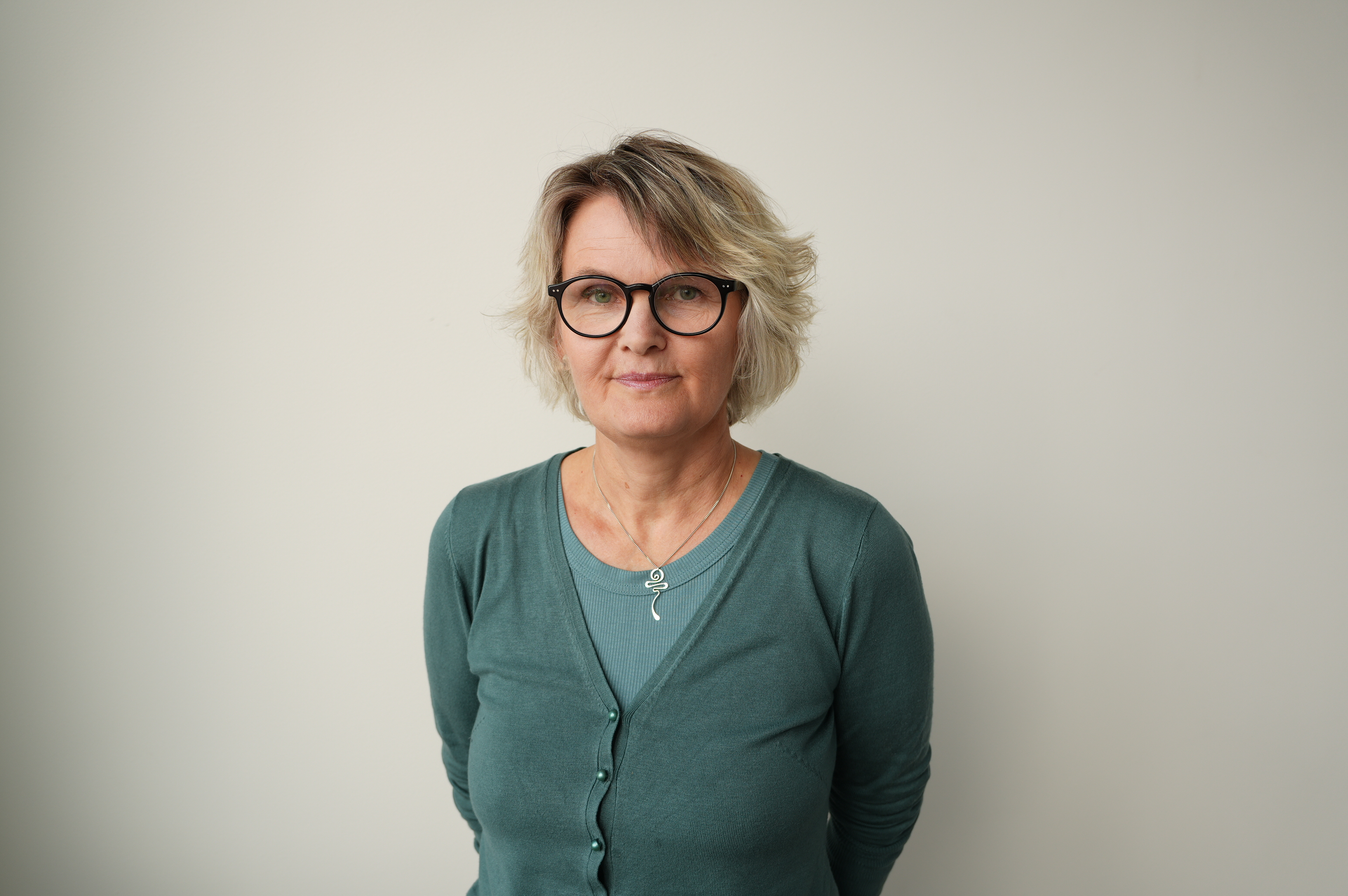
Maria Sköld spent twenty years as a journalist before she left, and for a while afterwards she was not sure she had done the right thing. There were university classes, a consultancy job with corporate clients, teaching political reporting on the side, and a suspicion that the whole thing had been a mistake. Then came the Stockholm International Water Institute, and after that the Stockholm Environment Institute, where she is now Senior Communications and Impact Officer working on water, the ocean and biodiversity.
She wrote to us about the detour that turned out to be the preparation, where good research gets stuck on its way to the people who need it, and how to stay honest about evidence when trust is under pressure.
Maria answered these questions in writing, in her own words.
You started out as a journalist and ended up on the other side, shaping how research reaches the world. Was there a moment where that shift happened?
Maria: I was a journalist for 20 years and loved it, but at some point, I started feeling I wanted to test something different. At the time, I was very curious about sustainability and figured that could be a career change, but I had rather vague ideas about what that really meant or how to get there. I started applying for jobs without any clear plan or strategy and ended up working as a communications consultant for corporate clients while I took lots of university classes and kept teaching political reporting to journalists alongside my regular job. It was all fun but not quite what I wanted to do and after a while I was wondering if leaving journalism had been a mistake.
That all changed after I landed a job at Stockholm International Water Institute and thereafter came to Stockholm Environment Institute. I enjoy being part of something that is both meaningful and challenging; there is always so much new to learn. But I’ve also come to realize is that all those seemingly odd jobs and courses actually prepared me well for what I do today.
After all, communication is about seeing things from many different perspectives so any previous experience from another field can be very helpful. Today I’m grateful for having worked in the private sector as well as with politicians since it makes it easier for me to understand when and how they need science-based support from an institution like SEI.
Tell us about your work at SEI and what's one project or story you are especially proud of?
Maria: What I’m most proud of is probably the approach to communication at the Stockholm Environment Institute, which is very different from what I’ve experienced in other places.
SEI is a research institute focused on current challenges linked to the environment and development. We for example study how to reduce disaster risks in coastal areas, how to ensure that more people have safely managed toilets, how supply chains contribute to deforestation in other parts of the world... And much, much more. But our role is not just to develop new knowledge but to make those insights useful for policymakers, industries, local communities and others.
Communication is a critical link between researchers and people who could make concrete use of the knowledge.
Traditionally, science communication has been seen as something that comes after the actual research is done, as a one-way act of disseminating the results. For the research process, this makes a lot of sense – other researchers are curious about the results and want to see if they can be replicated.
But this is not the right communication approach if you aim to share your research with policymakers or other potential users. Neither is it very helpful in research that builds on community involvement or co-creation. Then you will need continuous communication designed around the needs of different stakeholders.
A lot of good research never reaches the people it's meant to serve. Where do you think it gets stuck and what actually helps it travel?
Maria: I think the starting point must be who actually needs that research?
If the idea is to present a new solution to a problem, it’s probably a good idea to check with the potential users how interested they really are. Is this a realistic solution, which other options do they have, what do they prioritize? Ideally, the researcher and the communicator work together on a stakeholder analysis at the beginning of a project.
By actively speaking to people, you will understand their needs, interests and motivations so that you can design communication that is relevant to them. In the process, you will develop critically important relationships that make key actors more engaged and willing to play an active part.
When designing a communications strategy, you also have lots of research to draw on. In recent years, we’ve seen a tidal wave of studies that describe how change happens, whether it’s a large-scale societal transformation or an individual’s ability to keep that New Year’s resolution.
There is also quite a bit of related communications research. We know for example that how an issue is framed is very important for our willingness to engage with it, so it makes sense to spend a lot of time on messaging that resonates with stakeholders.
Another key insight is that people seek confirmation from their peers before accepting something new, so testimonials and social proof are important.
And we know that people tend to embrace new ideas only after encountering them several times and from different sources, which calls for a certain degree of repetition.
Trust in facts is under real pressure right now, and misinformation often travels faster than evidence. How do you communicate honestly in that environment without overclaiming or losing heart?
Maria: That’s a very good question and highly relevant wherever you live. But the answers won’t be the same in all contexts. So, maybe the first step is to analyze what it’s like in your own country or community.
A common misconception is that confidence in research is declining across the world, but a 2025 study from the University of Bath of global attitudes actually found that scientists are among the most trusted professions.
Most people also wanted scientists to communicate their research and play a greater role in policymaking.
Other studies, for example the Wellcome Global Monitor 2026, confirm that scientists are generally trusted but see a certain decline in trust levels and significant variation between different social groups.
It’s very important to understand one’s own local context. And to realize that what we see online may not be a genuine reflection of what people think about a topic. In many countries, we see polarization where science becomes a weapon, with targeted attacks against research on topics like climate and gender. But that is not necessarily reflecting widely held public views. Similarly, an often cited global UNDP study from 2024 showed that most people wanted to see stronger action against climate change.
Keeping that in mind is helpful, while dealing with many real threats like the flood of AI-generated fake research articles, the spread of misinformation and confusion online and actual attacks on researchers.
Communicators have an important role to play, providing transparency and accuracy. And by linking real-world events to concrete solutions. As more and more communities suffer from the consequences of a changing climate, it is timely to remind people of the benefits that come from better management of water, to name just one example.
Many of our members are early in their careers, often the only communicator in a small organization with no budget and no team. What advice would you give someone in that position?
Maria: Join forces with others!
If you’re the only communicator at your workplace, you might want to organize a network with comms professionals from other institutions or find an external mentor. Ripple Makers is of course a great example, thank you for forming it!
I think we all need supportive networks and safe environments to bounce ideas and learn from each other. Given how fast communication is evolving, we also all need continuous competence development. Luckily, there are plenty of supportive communities and many free resources online.
Last but not least, I think it’s important to team up with the non-communication professionals in your organization. Even though it’s not part of their job title, they also communicate in one way or another. Keeping them involved and engaged in communication is good both for you and for them.
Quickfire: What's your favorite body of water?
Maria: I grew up by a small Swedish lake in a forest and remember it as always freezing cold but still magical. So, that has a very special place in my heart.


Comments